The genetics
The film is a light comedy built on the nature versus nurture debate. The dean stands for a crude hereditarian view in which criminality runs in the blood, the kind of thinking that fed the eugenics movement of the early twentieth century; the professor stands for the opposite, that upbringing shapes character. Genetics as a science never appears: there is no geneticist, no laboratory work and no mention of genes, only "blood" and "heredity". The chimpanzee experiment is played for laughs and settles the question in favour of environment, which is also the romantic resolution. It has a real precedent: in 1931–32 the psychologist Winthrop Kellogg raised an infant chimpanzee, Gua, alongside his own son for nine months to see how human a chimpanzee could become; Gua learned many everyday behaviours but never human language. Today nature and nurture are understood to interact, and neither a chimpanzee's upbringing nor a father's record decides character on its own.
The story
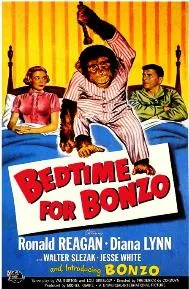
Psychology professor Peter Boyd is engaged to Valerie, daughter of his college's dean, Tillinghast. When the dean learns that Peter's father was a criminal, he forbids the marriage, declaring that Peter's blood is tainted. Peter, who believes environment matters more than heredity, sets out to prove it by raising a chimpanzee, Bonzo, as a child in a law-abiding home. He hires a young woman, Jane, as nanny, and the two act as Bonzo's parents, teaching him good habits. After a misunderstanding Valerie breaks off the engagement, and Peter learns that Bonzo is to be sold to Yale for medical research. Bonzo escapes and takes a necklace from a jewellery store, and Peter is arrested trying to return it, but Bonzo, as he has been taught, puts the necklace back himself. The experiment is judged a success, Bonzo is kept, and Peter and Jane are to marry.