The genetics
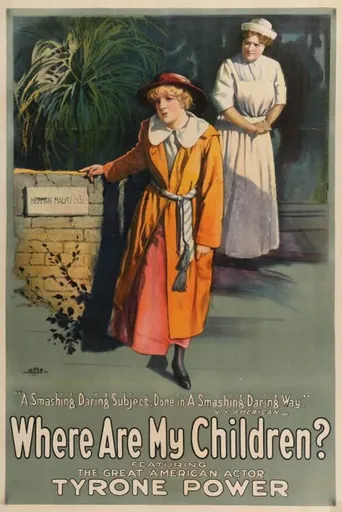
Genetics appears here through eugenics, the early-twentieth-century movement to improve the population by controlling who reproduces. Written partly as a response to Margaret Sanger's 1914 prosecution for promoting birth control, the film argues didactically for contraception and against abortion, and it presents examples of desirable and undesirable children as the products of good or bad breeding; a married couple in the cast are credited simply as the "eugenic" husband and wife. Critics have noted that its condemnation of abortion is framed in moral and eugenic terms, aimed at wealthy women who are seen as failing to produce the "right" children. There are no geneticists and no science on screen: heredity is a background ideology rather than a plot device. The film is mainly of historical interest as evidence of how readily American popular culture of the 1910s absorbed eugenic ideas, ideas that also underpinned compulsory sterilisation laws in the United States.
The story
District attorney Richard Walton prosecutes Dr. Homer, a physician arrested for distributing birth-control literature deemed obscene. On the stand, Homer argues for legal contraception, recalling cases from his practice: children abused in an alcoholic household, a poor family unable to care for sick children, and an abandoned mother who kills herself and her baby. Meanwhile, Walton's wife Edith has for years secretly used the services of Dr. Malfit, an abortionist, so that pregnancy will not interrupt her social life, and she sends friends to him too. When her brother seduces the young daughter of the Waltons' maid, the girl dies after a botched abortion by Malfit. After Malfit's trial, Walton finds his wife's name in the doctor's ledger, expels her friends from the house and confronts her with the question "Where are my children?". The couple grow old in a childless, lonely home.