The genetics
As in Huxley's novel, biology underpins the social order. Citizens are not born to parents but produced in a Hatchery and assigned to castes, and the series shows the lowest caste, the Epsilons, as clones, many of them based on a single man, kept content with soma. In the novel, citizens are engineered through artificial wombs and childhood indoctrination into castes based on intelligence and labour; the series keeps this caste system but gives more weight to an artificial intelligence and to surveillance. Genetics is presented as a tool of social stability that removes individuality and dissent, and the drama comes from what happens when people start to feel and question the order: an Epsilon who takes his own life, Bernard's doubts, John's influence and finally an Epsilon revolt. The scientists of the system remain anonymous; responsibility lies with the World State's leaders. Huxley wrote before DNA was understood, and in reality no technology can produce humans to order with predetermined abilities.
The story
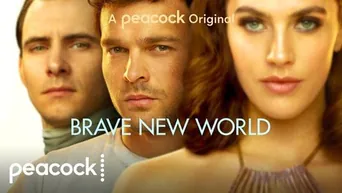
Loosely based on Aldous Huxley's 1932 novel, the series is set in New London, a society that has achieved peace and stability by abolishing monogamy, privacy, money, family and history. Its citizens are produced in a Hatchery and divided into castes, from the privileged Alphas to the Epsilons who do manual work, and they keep themselves happy with the drug soma, while an artificial intelligence called Indra connects them through a network. Bernard Marx, an Alpha counsellor, and Lenina Crowne, a Beta who works at the Hatchery, travel to the Savage Lands, outside New London, and bring back John, a young "savage" whose mother Linda dies during their escape. John's presence disrupts New London's acceptance of its caste system, and when the Epsilons, cloned workers, begin to rebel, the society collapses. The series, made for the streaming service Peacock, was cancelled after its first season.