The genetics
Cloning is the film's final twist. The passengers of the colonial spaceship are clones of real people, carrying their memories and personalities so that humanity can survive a virus wiping out life on Earth, and the protagonist discovers that the person she believes herself to be is still alive on the planet. The film uses this to raise questions of identity and memory: whether a copy who remembers a life is the same person, and whether her love for Léo is her own. The scientist, the original Elizabeth, designed the programme to save the species and is presented sympathetically; the ethical problems of creating people for a mission are hinted at rather than explored. Cloning a human would produce a genetically identical baby, not an adult, and there is no known way to transfer memories or personality from one person to another, so the film's premise belongs to science fiction rather than to any real technology.
The story
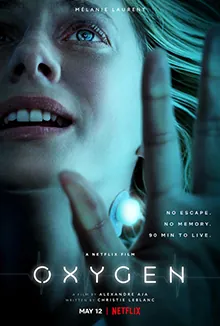
A woman wakes up trapped in an airtight medical cryogenic pod with no memory of who she is, while its oxygen supply runs out. The pod's artificial intelligence, M.I.L.O., will not open it without an administrator code. Contacting the outside world, she finds evidence that she is Elizabeth Hansen, a cryogenics researcher, and tries to reach her husband, Léo, but the voices she hears contradict one another. Eventually she learns that she is aboard a spacecraft, launched to carry thousands of people in hypersleep to a distant planet because a deadly virus is driving humanity to extinction. A video of an elderly Elizabeth reveals that she is a clone carrying the original woman's personality and memories; the woman she has been speaking to on Earth is the original herself. As the oxygen runs out, she disables the euthanasia protocol, reroutes oxygen from the pods of dead colonists and goes back to sleep. The clones of Elizabeth and Léo later arrive on their new world.