The genetics
This documentary shows how consumer genetic testing can uncover hidden parentage. Ballard's discovery came from a direct-to-consumer DNA test that matched her with half-siblings, and genetic genealogy then pointed to Cline; Indiana's attorney general later confirmed paternity with an independent DNA test. Here the doctor is not a geneticist but a fertility specialist who abused his patients' trust, and the film presents his actions as a profound breach of medical ethics and consent. It also raises questions with a genetic dimension: the offspring discover a large set of unknown close relatives, Cline told Ballard that he had destroyed the clinic's records, which deprived families of their medical history, and there is the risk that unknowing half-siblings could form relationships. The case had legal consequences: Cline pleaded guilty only to obstruction of justice, but Ballard's campaign led Indiana in 2019 to become the first state to make fertility fraud a crime. Similar cases have since been uncovered elsewhere through DNA testing.
The story
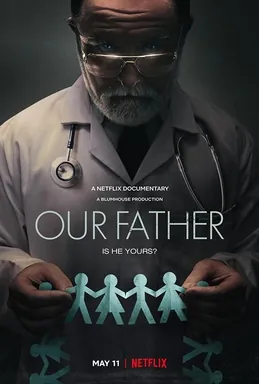
This Netflix documentary, directed by Lucie Jourdan and produced by Jason Blum, tells the story of Donald Cline, a fertility doctor in Indianapolis who, between the 1970s and the 1980s, secretly used his own sperm to inseminate patients who believed they were receiving sperm from anonymous donors. In 2014, Jacoba Ballard, conceived through artificial insemination at his clinic, took a consumer DNA test and discovered several previously unknown half-siblings living nearby. With them she worked out that their biological father was Cline himself. The film follows Ballard's search, the growing count of half-siblings, the reactions of the mothers, who describe the deception as a violation, and the struggle to have Cline held to account, since at the time there was no law against what he had done. Cline, a devout churchgoer, never fully explained his motives. By the time of the film's release, he had been confirmed as the biological father of 94 people.