The genetics
Like Frank Herbert's novel, the film presents the Bene Gesserit as a sisterhood running a centuries-long breeding programme, a form of eugenics aimed at producing the Kwisatz Haderach, a man with prescient powers. Part Two makes the programme more explicit than the 1984 film: Paul discovers that his mother is the Baron Harkonnen's daughter and that the sisterhood engineered the union of the Atreides and Harkonnen bloodlines, and the Bene Gesserit keep a back-up candidate in Feyd-Rautha, whom Margot Fenring is sent to assess. The programme is run not by scientists but by a religious and political order that manipulates genealogy and myth to gain power, and the film is critical of both. Paul's powers also depend on the spice and the Water of Life, not only on his ancestry. Planned breeding across many generations to produce a specific mental ability has no real-world equivalent, but it echoes historical eugenic projects of selective breeding in humans.
The story
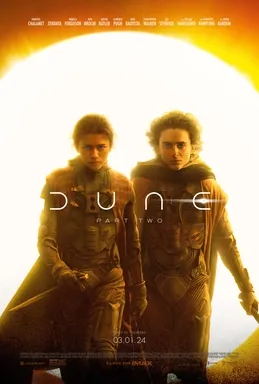
After the fall of House Atreides, Paul Atreides and his pregnant mother, Lady Jessica, a member of the Bene Gesserit sisterhood, take refuge with the Fremen of the desert planet Arrakis. Jessica becomes the tribe's Reverend Mother by drinking the poisonous Water of Life, which awakens the mind of her unborn daughter, Alia. Paul falls in love with the Fremen warrior Chani, who suspects the prophecy of a messiah is a Bene Gesserit myth, and leads raids on Harkonnen spice harvesting. The Bene Gesserit send Lady Margot Fenring to evaluate the Harkonnen heir Feyd-Rautha as a possible Kwisatz Haderach. Forced south, Paul drinks the Water of Life and gains prescience; he learns that Jessica is the daughter of Baron Harkonnen and that the Bene Gesserit arranged her union with Duke Leto to merge the two bloodlines. Proclaiming himself the messiah, Paul defeats the emperor's forces, kills Feyd-Rautha in a duel, claims the throne and launches a holy war.