The genetics
The film dramatises a landmark in human genetics: the finding that some breast and ovarian cancers run in families because of inherited mutations in a single gene. Helen Hunt's Mary-Claire King is a wholly positive portrait of a geneticist, a persistent researcher whose work with affected families eventually benefits patients like Annie. The method shown, family studies and genetic linkage, matches the record: King's group reported in 1990 that early-onset familial breast cancer was linked to markers on chromosome 17. The gene itself was cloned in 1994 by a team at Myriad Genetics, after a race between laboratories. The real Annie Parker, diagnosed with breast cancer in 1980 and ovarian cancer in 1988, was offered testing after the gene's discovery and tested positive, which she saw as proof that her family's cancers were not bad luck. Testing for BRCA1 and BRCA2 mutations is now standard practice for hereditary breast and ovarian cancer.
The story
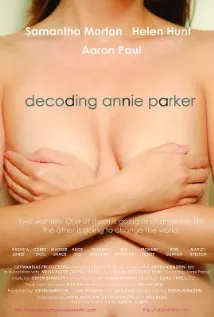
The film follows two parallel stories over several decades. In Toronto, Annie Parker loses her mother to breast cancer as a child, and later her father and her older sister, Joan, who dies of the same disease. Married young to Paul, an aspiring musician, Annie is diagnosed with breast cancer herself, undergoes surgery and chemotherapy, and becomes convinced that the cancer in her family cannot be chance. Her marriage breaks down when Paul has an affair with her friend. Meanwhile, at the University of California, Berkeley, the geneticist Mary-Claire King sets out to show that some breast and ovarian cancers are hereditary. Despite the doubts of many in her field, she collects families with many cases of the disease and in 1990 links a susceptibility gene, BRCA1, to a region of chromosome 17. Annie survives two further cancer diagnoses.
Sources
- https://en.wikipedia.org/wiki/Decoding_Annie_Parker
- https://www.commonsensemedia.org/movie-reviews/decoding-annie-parker
- https://scienceonscreen.org/films/decoding-annie-parker
- https://en.wikipedia.org/wiki/Mary-Claire_King
- https://facingourrisk.org/blog/i-knew-there-was-an-explanation-for-the-cancer-in-my-family-including-my-own-three-diagnoses