The genetics
DNA forensics is what resolves the case, although the film is a legal and family drama rather than a story about science. Kenny was convicted when only blood groups could be compared, a test that can exclude a suspect but cannot identify one. Betty Anne's realisation that DNA testing can match blood to a single person is the turning point, and the decisive scene is the discovery of the stored evidence, which shows the importance of preserving biological samples after a trial. No geneticists appear on screen; the laboratory work is off screen and the expert voice is Barry Scheck's, co-founder of the Innocence Project, which uses DNA testing to challenge wrongful convictions. The case is one of the many exonerations obtained this way in the United States. The real story went further than the film: in 2025, further DNA testing identified Joseph Leo Boudreau, who died in 2004, as the murderer.
The story
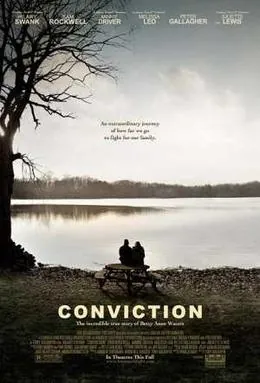
Based on a true story. Kenny Waters is convicted of the 1980 murder of a neighbour in Ayer, Massachusetts, on circumstantial evidence, testimony from his ex-wife and ex-girlfriend, and a blood-type match, and is sentenced to life without parole. His sister Betty Anne, a mother of two convinced of his innocence, puts herself through school and law school to become his lawyer, at the cost of her marriage. Realising that the new technique of DNA testing could prove Kenny's innocence, she contacts Barry Scheck of the Innocence Project. After a long search, she finds the blood evidence that was believed to have been destroyed, and the DNA results show that the blood at the scene was not Kenny's. The prosecutor still resists, but the two key witnesses admit that a police officer pressured them into lying, and in 2001 Kenny is freed.