The genetics
The film is built around a real reproductive technology: the saviour sibling. Anna is conceived by IVF so that she will be a genetic match for her sister; in practice, several embryos are created and tested by preimplantation genetic diagnosis, and only one whose tissue type (HLA) matches the sick child is transferred. No scientist is a character; the genetics is in the background, and the drama is ethical and familial. It turns on the objection most often raised against the practice, that the child is conceived as a means to an end, and extends it to a question the procedure itself does not settle: who may decide what is done to the donor's body afterwards. The first saviour sibling selected this way, Adam Nash, was born in the United States in 2000, and the practice is regulated differently from country to country; Spain authorised it in a 2006 law. Jodi Picoult's novel, on which the film is based, has a different ending, in which Anna dies and her kidney saves Kate.
The story
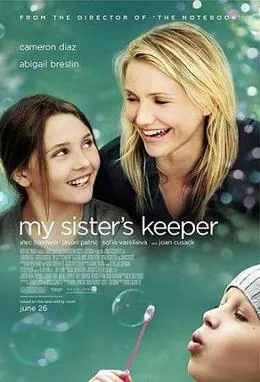
When their young daughter Kate is diagnosed with acute promyelocytic leukaemia and no one in the family is a genetic match, Sara and Brian Fitzgerald conceive Anna through in vitro fertilisation as a "saviour sister". From her umbilical cord blood onwards, Anna donates blood and stem cells to Kate, at the cost of repeated hospitalisations and painful procedures. When Kate, now fifteen, goes into kidney failure, eleven-year-old Anna hires the lawyer Campbell Alexander to sue her parents for medical emancipation rather than give up a kidney. The case divides the family: Sara, who gave up her legal career to fight for Kate, cross-examines her own daughter in court. Flashbacks show Kate's romance with another young cancer patient, Taylor, and his death. At the hearing, Anna's brother Jesse forces her to admit that she refused at Kate's request, because Kate knows she would not survive another operation and is ready to die. Kate dies peacefully, and Anna wins the case.