The genetics
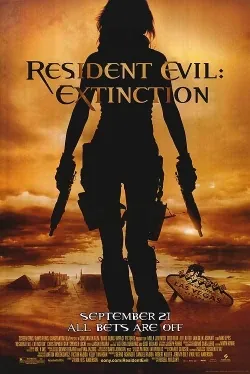
The film combines two genetic motifs: a virus engineered by a corporation and human cloning. The T-virus has turned humanity into the undead, and Umbrella's scientists continue experimenting rather than containing the disaster. Dr. Isaacs, the chief scientist, works on dozens of clones of Alice and uses blood taken from them to create the "Super Undead"; he is ambitious, defies his superiors and ends up infected and mutated by his own work. The clones are treated as disposable: their bodies are dumped in a pit after each failed test, an image the film uses to underline the company's disregard for human life. Alice's immunity, which makes her blood a potential cure, echoes the real use of survivors' antibodies to develop treatments. The film draws on the Resident Evil video games, where the corporation's bioweapons research is a constant theme; scientific plausibility is not a concern.
The story
Five years after the T-virus escaped from Raccoon City, the infection has spread worldwide and turned most of the planet into desert. Alice, who has acquired telekinetic powers, wanders the wasteland and joins a convoy of survivors led by Claire Redfield, persuading them to head for a reportedly uninfected area in Alaska. In an underground Umbrella Corporation facility, Dr. Isaacs breeds clones of Alice, which die one after another in tests, and experiments on zombies to make them more intelligent and docile, creating faster and stronger "Super Undead". Against orders from his superior, Albert Wesker, he ambushes the convoy to recapture Alice and is bitten. The survivors escape by helicopter, while Alice enters the facility and learns from an artificial intelligence that her blood can cure the virus. Helped by one of her clones, she kills the mutated Isaacs and later warns Wesker that she and her clones are coming for him.