The genetics
Genetic engineering drives the film. The park's dinosaurs are cloned from ancient DNA, as in the earlier films, and the new star attraction is a designed hybrid, the Indominus rex, whose secret design includes raptor DNA and gives it traits such as camouflage and the ability to mask its heat signature. When the park's owner confronts the geneticist, Dr. Henry Wu, over the design, Wu points out that none of the park's animals are what real dinosaurs looked like: they are genetically engineered, with gaps in their genomes filled with DNA from other species, as in the original Jurassic Park. A subplot with InGen's security chief, who wants to use the raptors as weapons, points to military uses of the technology that the sequels develop. Paleontologists criticised the film for its scaly, featherless dinosaurs, and the filmmakers used Wu's line to justify them. The cloning itself is impossible: the oldest DNA recovered is around one to two million years old, while dinosaurs died out 66 million years ago, and claims of dinosaur DNA have been dismissed.
The story
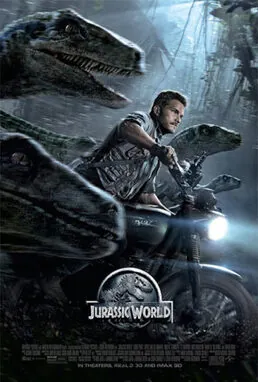
Twenty-two years after the original Jurassic Park disaster, a fully working dinosaur theme park, Jurassic World, operates on Isla Nublar. Its newest attraction is the Indominus rex, a transgenic hybrid dinosaur created by the geneticist Dr. Henry Wu. Brothers Zach and Gray visit the park, where their aunt Claire is operations manager. Owen Grady, who trains Velociraptors, warns that the Indominus is dangerous and unpredictable. The hybrid, able to camouflage itself and mask its heat signature, escapes and kills its way across the island, while released pterosaurs attack the crowds. When InGen's security chief uses the raptors to hunt it, Owen realises that it has raptor DNA, as it takes command of the pack. In the end, the raptor Blue and the park's old Tyrannosaurus fight the Indominus, which is dragged underwater by a Mosasaurus. The island is evacuated.