The genetics
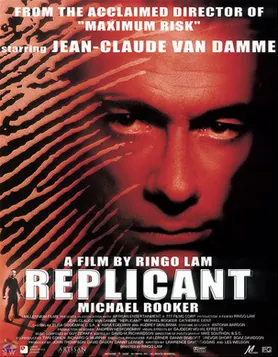
Cloning and the question of nature versus nurture are central to this action film. A government agency creates an adult clone of a serial killer from crime-scene DNA, hoping that his genetic identity will give him access to the murderer's memories and help catch him. The film plays on the fear that a clone of a killer will inherit his violence, but argues the opposite: brought up, however harshly, by a policeman who becomes his only family, the clone develops a gentle personality and rejects his original. A flashback shows that Garrotte's violence comes from childhood abuse, reinforcing the idea that environment shaped him. The scientists are faceless government operatives who use the clone as a tool. Real clones are born as babies and grow up normally; they cannot be produced as adults, and memories are not stored in DNA or shared telepathically between genetically identical people.
The story
Edward "the Torch" Garrotte is a serial killer who murders mothers and sets them on fire. Seattle detective Jake Riley has hunted him for three years without success. Shortly after Jake retires, a secret government agency recruits him for a special project: it has cloned Garrotte from DNA found at a crime scene. The clone, the Replicant, has the body of a forty-year-old but the mind of a child, together with fragments of Garrotte's memories and a telepathic link to him. Jake must train him to track the killer down. Jake treats him roughly, but the Replicant sees Jake as family and gradually learns about the world. He refuses Garrotte's invitation to join him and discovers that he is not a killer. In the final fight in a hospital furnace room, Jake shoots Garrotte. The Replicant seems to die in an explosion, but weeks later Jake finds he is alive and leading a normal life.