The genetics
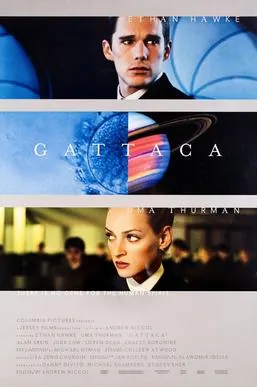
Genetics is the core of the film. Its society practises eugenics through embryo selection, and a single blood or hair sample is enough to read a person's predicted health, lifespan and prospects. Genetic discrimination is illegal but routine, enforced through DNA checks at work and in police investigations. The scientists who appear are clinicians serving this system, although Dr. Lamar, who runs Gattaca's tests, turns out to know Vincent's secret and lets him fly, remarking that his own genetically selected son is "not all that they promised". The film argues against genetic determinism: the in-valid succeeds through effort, while the genetically privileged Jerome is crushed by the expectation to be the best. Embryo screening for single-gene disorders is real today, but predictions for complex traits from DNA remain modest, far from the certainty shown here. The film is widely cited in bioethics debates; reviewing it in Nature Genetics, molecular biologist Lee Silver said geneticists should see it to understand how the public views their field.
The story
In a near future where most children are genetically selected, Vincent Freeman, conceived naturally, is classed at birth as an "in-valid": a blood test predicts a heart condition and a life expectancy of about 30 years. Barred from his dream of space travel, he works as a cleaner at the Gattaca Aerospace Corporation until he assumes the identity of Jerome Eugene Morrow, a genetically selected former swimming star left paralysed after being hit by a car. Using Jerome's blood, urine, hair and skin, Vincent passes the company's constant DNA checks and is chosen as navigator for a mission to Titan. A week before launch, an administrator is murdered, and one of Vincent's eyelashes found at the scene puts the police on the trail of an unregistered in-valid. While he falls in love with his colleague Irene, he must face the detective on the case: his genetically selected younger brother, Anton.