The genetics
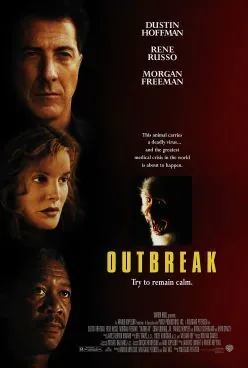
Outbreak is mainly about virology and epidemiology rather than genetics, but viral mutation is the turning point of the story: a virus spread by contact becomes airborne after a superspreading event, and only the original host animal holds the antibodies needed for a cure. Scientists appear on both sides. Daniels and his civilian and military colleagues are dedicated investigators who risk infection, while McClintock represents military biological weapons research, willing to sacrifice a town to keep a weapon secret. Ford sits in between, complicit in the cover-up but finally siding with Daniels. Motaba is fictional but modelled on Ebola, and the film was released in March 1995, while a real Ebola outbreak was under way in Zaire. Its science has often been criticised, especially in comparison with Contagion (2011): the virus multiplies within hours instead of days, and an effective cure is produced in minutes and works almost immediately, whereas developing and testing real antivirals or antisera takes months or years.
The story
In 1967, in Zaire, US Army officers Donald McClintock and Billy Ford discover a deadly virus, Motaba, and destroy the infected camp to keep it secret. Twenty-eight years later, Army virologist Sam Daniels investigates a new Motaba outbreak in Zaire and warns of its spread, but Ford, now his superior, dismisses him. An infected capuchin monkey is smuggled into California and spreads the virus; in the town of Cedar Creek it mutates into an airborne strain, and the Army quarantines the town under martial law. Daniels learns that his superiors knew of the virus and had kept the original strain as a biological weapon, and that McClintock plans to firebomb Cedar Creek to hide the mutation. He escapes arrest, tracks down the host monkey, and uses its antibodies, combined with Ford's experimental serum, to produce an antiserum that saves his ex-wife, CDC scientist Roberta Keough, and the town. With Ford's help he stops the bombing.