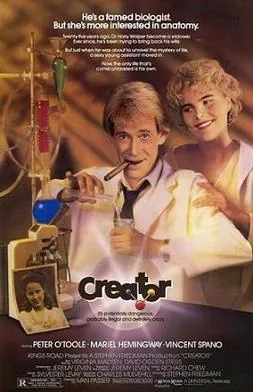
The genetics
Cloning is the central scientific idea of this romantic comedy, though it is handled lightly. Harry wants to recreate his dead wife from her preserved cells, using an egg donated by Meli, and the film treats this as an expression of grief and devotion rather than as a menace. The portrait of the scientist is affectionate: Harry is brilliant, irreverent and humane, contrasted with an ambitious, petty rival who is more interested in his lab space than in research. The story ultimately rejects the cloning project, not on ethical grounds but because Harry realises that he must love the living instead of trying to recover the past, and he discards Lucy's cells. The film predates the cloning of Dolly the sheep by more than a decade. Even a successful reproductive clone would be a new individual who merely shares the donor's genome and must be born and grow up, so cloning could not truly bring a person back.
The story
Dr. Harry Wolper, an eccentric medical professor at a Southern California college, has spent thirty years trying to clone his wife Lucy, who died in childbirth, from cells he has kept. He hires Boris Lafkin, a struggling pre-med student, as his lab assistant and in exchange coaches him in his courtship of a fellow student, Barbara. To obtain eggs for the experiment, Harry recruits Meli, an uninhibited young woman who moves in with him and gradually falls in love with him. A rival professor, Sid Kuhlenbeck, tries to have Harry sidelined and take over his lab, but the plan backfires when Harry wins a large research grant. When Barbara suffers an aneurysm and falls into a coma, Harry helps Boris keep her alive until she wakes. Having found new love, Harry pours Lucy's cells into the sea and marries Meli.