The genetics
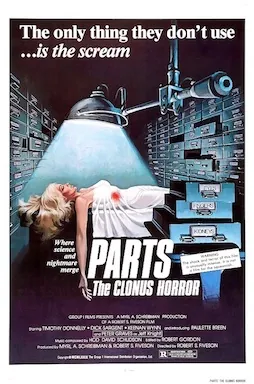
Human cloning is the premise of the film: copies of the elite are bred and kept in a closed community as living stores of spare organs. The film presents the clones as full human beings with feelings and curiosity, and its horror comes from the way they are deceived, mutilated to keep them docile and finally killed. The scientists and staff of Clonus are not driven by research but serve a political conspiracy that reaches the future president and a senator, and they kill outsiders to protect the secret. Released in 1979, the film anticipated by decades the debate on cloning for "spare parts"; its premise was later echoed closely by The Island (2005), and the makers of Clonus sued DreamWorks for copyright infringement, reaching a settlement. In reality, cloning a mammal from an adult cell was first achieved with Dolly the sheep in 1996, and a clone starts life as an embryo, so it could not provide matched adult organs without being raised for years, as the film imagines.
The story
In an isolated desert compound called Clonus, clones are raised as a source of replacement organs for wealthy and powerful people, among them the soon-to-be president-elect Jeffrey Knight. The clones are kept ignorant of the outside world and train in the hope of being "accepted" to go to "America"; the chosen ones are given a farewell party, then sedated, sealed in plastic bags and frozen so their organs can be harvested. Many have been lobotomised to keep them docile. Richard, a clone with normal intelligence, begins to question his existence, discovers the truth and escapes. He is taken in by a retired journalist, Jake Noble, who brings him to Richard Knight, the man he was cloned from and Jeffrey's brother. Richard returns to the colony for Lena, whom he loves, but finds she has been lobotomised, and he is captured and killed. Before his own murder, Noble manages to send Richard's tape exposing the project to the press.