The genetics
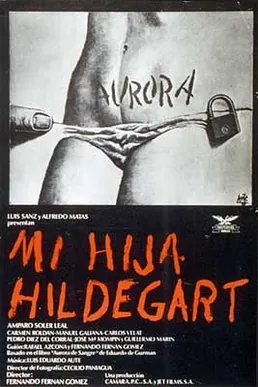
Based on a real case, the film portrays a private eugenic experiment. Aurora Rodríguez Carballeira believed that a child could be shaped from conception to serve human progress; she chose a "physiological collaborator", a former priest and navy chaplain, to father her daughter, and then subjected Hildegart to a rigorous education. The film blends heredity and upbringing: Aurora's faith in the father she selected is shaken when he confesses that sex has ruined his life, and her plan rests at least as much on training as on biology. There are no scientists in the story, but its backdrop is the eugenics and sex-reform movement of the Second Spanish Republic, in which the real Hildegart took part as secretary of the League for Sexual Reform and a speaker at the First Spanish Eugenics Conference in 1933. The film does not judge Aurora's ideas directly; it presents her as a possessive, paranoid mother who treats her daughter as a work she has the right to destroy.
The story
Madrid, 9 June 1933: Aurora Rodríguez goes to the home of a lawyer and tells him she has just shot dead her 18-year-old daughter, Hildegart. Framed by the recollections of the journalist Eduardo de Guzmán and by Aurora's interrogations, psychiatric examinations and trial, the film reconstructs in flashbacks how she conceived Hildegart as a project: after raising her nephew, the child pianist Pepito Arriola, until his mother took him back, she chose a man to father a child and educated her daughter under iron discipline to be the woman of the future. Hildegart becomes a prodigy, a lawyer, a socialist activist and a writer on sexual reform who corresponds with figures such as Havelock Ellis. When she begins to escape her mother's control, falls in love and plans to leave, the paranoid Aurora, convinced of a conspiracy to take her away, kills her.